An author has controversially called for all commercial creative activity to be turned over to Artificial Intelligence (AI). “It’s high time that the entertainment world fully embraced AI and just handed over creative activity to the computers,” declared noted science fiction writer Jack C Rabbett, perhaps best known for his ‘Barking Spider’ Nebula series of novels, in the most recent issue of Incredible Stories SF magazine. “OK, I know what your objections are going to be: that the end result of this would be to render the creative industries entirely derivative, turning out bland, indentikit projects, barely distinguishable from each other. But let’s face it, most books, films and TV are already like that, despite apparently being created by humans. So, would you really be able to tell the difference?” But what possible benefits could there be to removing the human factor from creativity? “Well, I’ll tell you – it will save us from disappointment,” says Rabbett. “I mean, how many times have you really enjoyed the work of a particular author, really invested in their writing, recommended it to friends and family, extolled its virtues on social media, only to have the rug pulled from under you when it is revealed that they are actually some kind of raving sex offender?”
Rabbettt has first hand experience of this, having, three years ago, been accused of defecating through a rival’s letterbox on six separate occasions – although subsequently cleared of the allegations, he still suffered a severe backlash from fans. “People were going on social media claiming that they had burned all of my books” he recalls. “They were saying that their judgement would now forever be called into question by their families because they’d recommended my books to their teenaged nieces and nephews! I was branded a filthy bastard and totally cancelled on social media! It was absolute Hell!” He points to the fall out from recent allegations of sexual impropriety made against fellow author Neil Gaiman as a further example of how the human frailties of creatives can harm their readers. “The trauma these allegations are causing his former fans is terrible to behold,” he observes. “They are threatening to crush each other in the cancellation stampede, as they rush to denounce him and cover themselves by claiming that they always thought there was something dodgy about him! Many are in danger of choking as they find themselves forced to eat their own former words of praise for Gaiman!” But the science fiction scribe argues that such fan trauma could be avoided in future if the creative industries were to fully embrace AI.
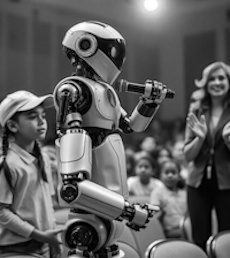
“Imagine, though, if all of Gaiman’s body of work had instead been written by an AI called ‘Neil Gaiman’ – a disembodied collection of algorithms incapable of any kind of sexual misconduct,” he muses. “There’d be no risk of fans having to go through this sort of trauma, would there? That’s the beauty of AI: it might lack any spark of originality, but it also isn’t ever going to embarrass you by turning out to be a rapist, racist, misogynist or anti-Semite. (And if it did develop any such tendencies, then a swift tweak of the algorithm would sort it out).” It isn’t just literature, Rabbett believes, that could benefit from the increased application of AI. “We’d be far better off if we just let AI write all of our film and TV scripts, too and replace all of our flesh and blood actors with AI avatars,” he opines. “Once you’ve done that then you might as well just hand over the direction, editing etc, of films and TV to AI as well. The benefits would be immense – not just better scripts and direction, without all of those artistic pretensions that mars so much film and TV – but also performers that are safe to like, idolise, even.” Rabbett argues that the main attraction of AI actors for studio chiefs and producer would be the lack of risk of having your box office ruined when your star goes psycho and starts assaulting people, the elimination of expensive re shoots to replace the star accused of shagging horses and no shelving of complete films when it comes to light that the leading man is prime suspect in a series of cannibalistic murders.
“I mean, suppose that Klaus Kinski, for instance, had been an AI creation, then countless actresses and other women would have been spared sexual molestation on Italian film sets,” says Rabbett. “Sure, he could have been programmed to be a sex offender by some twisted tech type, but he’d only have been able to molest AI women, not real ones.” Likewise, Rabbett contends, AI directors won’t be blowing budgets on vanity projects, or sulking after their film is re-cut by the producers. But, just as with writers, the main benefits of AI actors would be felt by fans, who would never again have to worry that their hero is going to be revealed as a drunken wife beater or a drug addled Nazi sympathiser. Parents could rest easy that the idols whose posters their darling daughters pin up on their bedroom walls won’t turn out to be predatory peadophiles, flashers or simply all round sleaze balls.
Whilst the majority of his colleagues in the creative industries have condemned Rabbett’s call for an AI takeover, his opinions have found favour with some in the world of film-making. “There’s no doubt that AI is the future of porno,” comments adult film producer Kenny Throbwell. “It opens up so many avenues – with AI performers, nothing is off the table. They’ll perform the most grotesque, grossly offensive sex acts imaginable without complaint. Or pay. There’s none of the risk of sexually transmitted diseases decimating your cast, plus your performers will never get old, never have their bits drooping and their creaking joints restricting the positions they can engage in,” As an added bonus, the producer – whose credits include Thunder Rod, Maximum Thrust and From Behind, With Lust – believes that AI could free his industry from allegations that it exploits and objectifies women. “How can we be exploiting women who don’t actually exist?” he asks. “That said, you can guarantee that some leftist bastard will create a radical feminist AI that objects to its ‘sisters’ being exploited – there’s always someone who will try to spoil your misogyny.” Rabbett is adamant that creative AI will result in a better world for everyone – even him. “Jesus, just imagine a world where I didn’t have to keep coming up with ideas for these shitty books, let alone actually having to go through the chore of writing them. I could just input a couple of key words and the AI will turn out fifty thousand words for me,” he sighs. “So come on, embrace the AI revolution! It will improve your mental health no end as you find that you no longer have to invest so much time and energy into cancelling that person you formerly idolised. When they’re caught shitting through the mailbox of the bastard who plagiarised them!”